Rosetta Stone Learning Center

  • Home
  • About
  • Teach
  • Work
  • Grow
  • Apply
  • FAQ
  • Blog

Japanese New Year’s traditions to kick off 2021

FacebookTwitterLinkedInEmail

Begin the New Year with these 6 Japanese traditions that anyone can enjoy! Feel the history and participate in what makes the New Year’s holiday great.

Joya no Kane
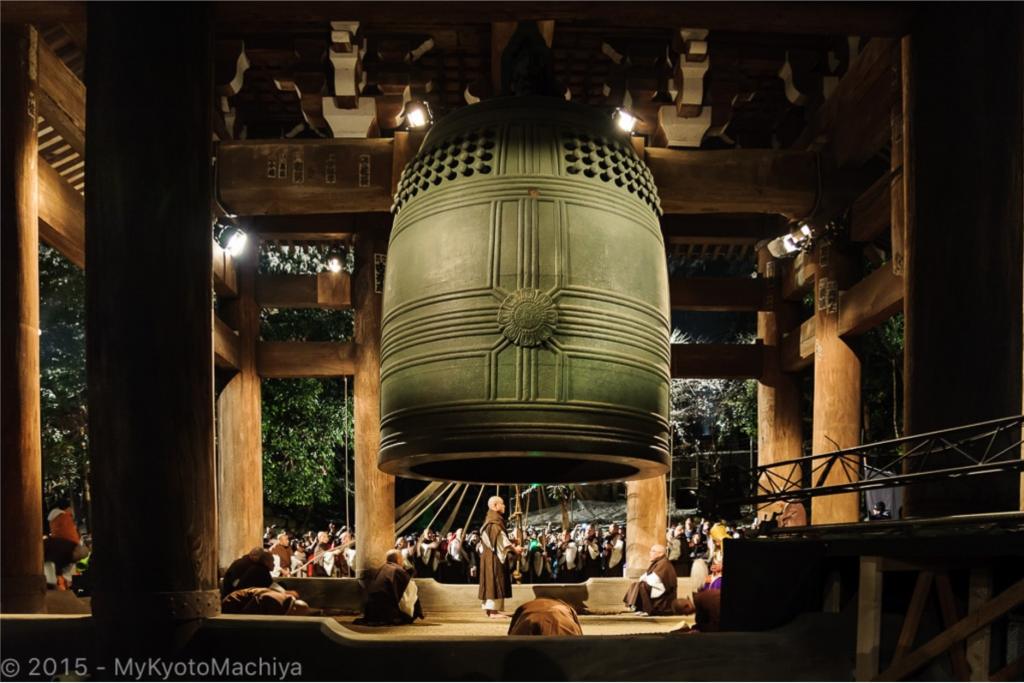
The ringing of the New Year’s bells is a Buddhist tradition where monks ring a temple’s bells 107 times leading up to midnight, with one final ring exactly at midnight. The goal is to rid oneself of worldly desires and leave the last year’s problems behind for a fresh start. 

People can visit temples on New Year’s Eve to listen to the bells and pray for good things during the new year. Some popular temples for this ceremony in Tokyo are Senso-ji, Zojo-ji, Zenpuku-ji, Tsukiji Hongan-ji, and Araiyakushi Baishoin.


Toshikoshi Soba

“Year-crossing” soba is a traditional food eaten to reflect on the past year and usher in the New Year. The dish is served hot and is usually eaten at midnight on New Years’ Eve. Luckily, toshikoshi soba is easy to make and can even be made vegetarian or served with extra toppings. 

For a recipe, visit https://www.justonecookbook.com/toshikoshi-soba/.


Osechi Ryori
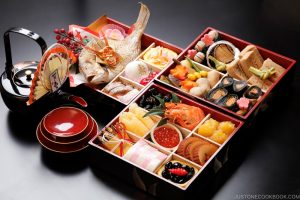
The long tradition of osechi ryori was originally created to give wives a break from cooking while giving people a meal heavy with symbolism for the New Year. Kuromame (hard work and good health), dried persimmon (long life), and Katniss root (successful career) are just some of the many foods that can be found in osechi ryori boxes. While some families still make these dishes at home, it is quite common to buy osechi boxes. Most supermarkets and department stores offer a wide variety of osechi leading up to New Years’ Eve.


Nengajo
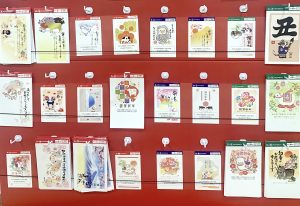
Japanese New Years’ cards are still a very common tradition that is meant to show family, friends, and even co-workers gratitude for all of their help over the past year. As a general rule, if you receive a New Years’ card, it is considered good manners to send one in return, but make sure that the card(s) will be delivered by January 1st!


Hatsumode
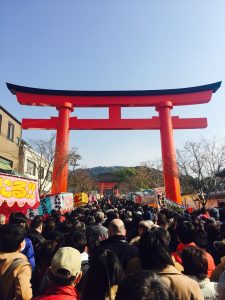
Hatsumode is traditionally the first Shinto shrine visit of the new year; however, some people do visit Buddhist temples as well. Generally, people pray, buy charms or amulets, and have the old charms from the previous year ceremonially burned. Almost any shrine or temple is very busy during the first few days of the new year, so expect long lines. 


Hatsuhinode

Hatsuhinode is the viewing of the first sunrise of the year across the country. Some famous places for viewing are Tokyo Tower, Yakuo-in (Mt. Takao), and Enoshima (Kanagawa Prefecture).  


Have a happy New Year and enjoy the holidays!

 

At Home for the Holidays

FacebookTwitterLinkedInEmail

Here are 5 things you can do to make your Christmas from home the best it can be! Enjoy the holidays this year with family and friends all from the comfort of home.

1. Make a festive drink!
There is a wealth of Christmas drink recipes online, from spiced apple cider to White Christmas martinis to the traditional mulled wine. A festive drink, be it hot or cold, is a great way to get into the Christmas spirit and enjoy the flavors of the holidays.


2. Decorate your home!
Whether you live in a large house or a small apartment, taking the time to decorate your home can put you in the holiday spirit and make it all the more enjoyable. While not everyone can fit a Christmas tree in their home, there are plenty of other decorating options to suit your needs: lights, mini Christmas trees, wreaths, you name it! Anyone can bring a little more holiday spirit to their home just in time for Christmas.


3. Cook a big Christmas dinner!
It may be surprising, but what constitutes a Christmas dinner varies wildly from country to country! There are so many options to choose from that you can craft your own perfect Christmas dinner suited to your taste. Turkey, chicken, or goose, cranberry sauce or no cranberry sauce…whatever you like! With a quick internet search, you can find recipes for all kinds of Christmas meals. T’is the season for trying out your cooking skills!


4. Host a virtual Christmas Eve party!
Staying home for the holidays can be a bit tough, but that doesn’t mean you can’t party! Hosting a Christmas Eve party virtually is easy and can be done while you are comfy and cozy in your own home. Grab a drink, some snacks, and jump in that video call to enjoy the holiday with friends and family.


5. Send festively wrapped gifts!
Everyone enjoys receiving gifts, but sending them is just as fun. While you can’t decorate the box you send them in very much, you can still wrap all of the gifts inside. Use patterned paper, ribbons, and bows so your loved ones get to open a box full of Christmas and excitement! You can also set up a virtual gift-opening party so that everyone can enjoy the gift opening experience together.


With these simple tips, you and your family and friends can enjoy lots of holiday fun. Merry Christmas to everyone!


Year-end Tax Adjustments in Japan

FacebookTwitterLinkedInEmail

Filing taxes can be a daunting procedure, especially in a foreign country. However, this is not necessarily a burdensome task as most companies handle their employees’ year-end tax adjustment process (年末調整).

Nenmatsu Chosei (年末調整)

Your main employer automatically withholds income tax from your monthly salary. Your final annual tax due, however, is affected by items such as salary from a previous job you had over the year, the dependents you declare, insurance premiums, or special exemptions for spouses. Then, depending on if the final annual tax due is smaller or larger than the withheld tax amount, tax may either be refunded or payable.

Around November, your company will ask you to fill out some paperwork and declare any data related to the above items so they can calculate your final annual tax due. Then, they will be able to determine your total income and issue your income tax certificate (源泉徴収票) at the end of the year.

Regular employees typically do nenmatsu chosei (年末調整) with their employer. On the other hand, part-time employees have the option of doing nenmatsu chosei (年末調整) or kakutei shinkoku (確定申告).

Kakutei Shinkoku (確定申告)

Kakutei shinkoku (確定申告) is for self-employed individuals and those wishing to file for tax adjustments by themselves. This is also required in the following cases:

  • You leave Japan before the year ends
  • You work for a company not based in Japan
  • Your earn more than 20 million yen per year
  • You have more than one employer
  • You receive other annual income exceeding 200,000 yen

The tax filing period for this is between February and March. You can complete the procedure at the tax office or online.

You will need to prepare statements of all your income earned for the year, receipts for tax deductible items (social insurance, life insurance, medical fees), as well as remittance slips and other supporting documents for dependents.


For more information, please visit the official website of the National Tax Agency
https://www.nta.go.jp/english/index.htm

Pointers for Better Online Teaching

FacebookTwitterLinkedInEmail

With economies across the world stalled under the effects of the Coronavirus, lives and work have been upended for most. For those fortunate enough not to have suffered the direct health effects of the virus or the grief of lost loved ones, there is still the uncertainty of employment to handle. For many teachers here in Japan, this means either job loss or drastic pivoting in our modes of work. 

While teaching online is nothing new in the field of education, and English language learners are accustomed to taking lessons from the comfort of their own homes, the need to stand out in the market has increased after the influx of online teaching during the pandemic. Simple standards kept across all teaching platforms can improve marketability and sustain performance. The following is not an exhaustive list but should be a foundation for steady delivery while working remotely.


Lighting & Background


Good lighting is standard, but this becomes paramount when your Zoom meetings become an essential part of how you deliver your service. Lighting should be overhead and facing you without spotlighting you against the background. Plain backgrounds are best. Too-casual environments and cluttered or broken backgrounds may not be obviously detrimental, but you miss out on the chance to re-create the focused zone that a classroom atmosphere would otherwise invoke.

Controlling your environment is also a way to set yourself apart in the market. If students see the same, near-perfect lighting each time they have a lesson with you, they will begin to associate it with you. This is an obvious advantage over competitors whose teaching environments are distracting or inconsistent in quality. Of course, if you are working with a company, adhering to its protocol and using a company-themed virtual background is usually preferred. However, with many teachers working freelance after major cut-backs or bankruptcies, setting a personal protocol is a good way for them to elicit this brand effect.


Positioning


Keeping an appropriate distance from the camera and being aware of when and how you leave this position in order to demonstrate your material will also go a long way in managing the lesson flow. Having a good sense of a center to which you return regardless of what you do on screen elicits an expectation from the student that can help ground their focus on the material rather than your image. Having a sustained awareness of a center will also help cut down on distractions that you might not be aware of when you are engaged in the lesson. 

Try to keep a distance from the screen that sets you squarely in the frame from the chest up. Many Zoom users make the mistake of sitting back from the screen as they would when watching programs or sitting in meetings. The other mistake is to lean in close to the screen while looking at the material being presented. This can be distracting enough in general meetings, but during a lesson, it can lead to the focus shifting from the material to the teacher, especially if your camera refocuses with changes to the picture. Keeping the focus flowing with the pace of the lesson should be foremost where student production is a mainstay of the service.


Quality


Photo by Lesia Valentain

Some other things to consider for effect are basic elements of quality. It’s easy to forget about voice tone and volume, especially if you are not accustomed to adapting your personal audio needs to a work standard. Make sure your microphone and camera are adequate to handle the needs of your students. Be sure to maintain a steady pitch of voice as well. Many teachers fall into the habit of speaking too softly online due to hearing themselves in the headset. The other temptation is to shout-talk into the receiver. Although it’s easy to forget your voice tone in a long day of lessons, keeping an even tone of voice will help you in other aspects of your delivery, such as language grading.

Another basic element of quality maintenance is the keeping of company standards if you are working under contract. Most companies have software that connects their instructors and students. It will only be to your advantage to be squared away with its ins and outs so that when technical issues arise, you are able to stay professional and resourceful. 


Attire


For teachers who are working under contract with English language schools, having a consensus on dress code is a simple way to maintain the company image. For those working freelance or with companies that do not maintain a standard for clothing, it can still benefit you to keep a standard for yourself. This latter situation needn’t be formal or even business apparel. Simply maintaining a similar standard for every lesson helps contribute to the personal brand that you are building through sustained efforts to keep your teaching environment the same across lessons.


Workstation


Photo by Samule Sun

Other than the computer and yourself, the desk is probably the most important tool in the workspace. Creating a workstation that supports your positions from the start is the best way to set yourself up for sustained performance. Ergonomics gets a lot of traction these days, but thinking more in terms of general wellbeing is probably best for those of us juggling home life with work. As the pandemic continues and remote work is extended beyond what many have planned for, giving enough attention to a healthy work space early on can save you the time and lost energy of constant adjustments. 

When setting the height of your desk or chair, elbows should rest comfortably at your side at a ninety degree angle. This allows you to keep your back in the recommended “S” position –  not bolt upright but relaxed with natural curvature of the spine and shoulders held back. Finally, position your monitor so that the top of the screen is at eye level. This will encourage you to maintain a level gaze and not pitch forward or tilt your head back through the hours.

The desk should also support this posture. The temptation to lean into the computer screen is perhaps greater for teachers as we are connecting with other individuals directly throughout the day. This is especially true for those of us teaching in Japan and using kotatsu or other low surfaces for telework. A table that is too high will also encourage you to lean forward as you tire of lifting your elbows. Over the course of the day, this will mean pressure on the diaphragm and shallow breathing. 


Staying Connected


Photo by Chris Montgomery

For those of us teaching with companies, don’t miss the feedback you would normally get from an office environment. While it might be great to work independently, if you are still part of a team, regularly seek out contact with a supervisor or colleague. Touching base will ensure that you don’t miss out on valuable information, coaching, and the subtle smoothing of the edges that occurs in more directly collaborative environments. 

While our offices may be spread thin, our workloads are not, and staying in touch with your colleagues becomes therefore much more important in keeping the team together. Especially in fast-paced  environments, the danger of siloing is greater when you are out of the office environment. Proactively engaging the regular tools of communication and scheduling regular video meetings with team members or managers is important to staying informed and keeping your work in line with your team. It’s also just good practice for team spirit and motivation and an element over which you can exercise significant control.


Conclusion

While much of the above advice is simple and seemingly obvious, it is easy to neglect. Keeping these standards in place will have a cumulative effect on performance in the long run. Thinking of the ideas like a process that is up to you to keep running smoothly will allow you to keep distractions to a minimum and have lesson quality remain the proper focus of your work. 

  • « Previous Page
  • 1
  • 2
Quick Links
  • About Us
  • Teaching Positions
  • Our Schools
  • Training & Development
  • Apply
  • FAQ
  • Blog
View Available
Job Openings
Visit Gainjinpot.com
Contact Info
hr@rosettastone-lc.jp
Connect With Us
Quick Links
  • About Us
  • Teaching Positions
  • Our Schools
  • Training & Development
  • Apply
  • FAQ
School List
  • Ginza
  • Shinjuku
  • Ikebukuro
  • Kabukiza Tower
  • Umeda
Terms & Conditions . Privacy Policy
Copyright © Rosetta Stone Learning Center . All Rights Reserved
  • Home
  • About
  • Teach
  • Work
  • Grow
  • Apply
  • FAQ
  • Blog