Rosetta Stone Learning Center

  • Home
  • About
  • Teach
  • Work
  • Grow
  • Apply
  • FAQ
  • Blog

Wishing you good cheer in the New Year!

FacebookTwitterLinkedInEmail

How do you welcome the New Year?  

The beginning of a new year is a time to reflect on the year gone by, and make plans for the future. Some people go to shrines and temples, hoping to change our lives for the better.  We tip a glass of sake or wine with our family.

During this special time of the year, we give and receive warm greetings to our loved ones. These inspiring messages will be especially important as we express our hopes and dreams for better days ahead in 2022 after surviving the challenging year of 2021!



There are many お正月 (Oshogatsu) New Year’s phrases in Japan, but what phrases are there to use as greetings?

Today, I would like to introduce two phrases, one commonly used at the end of the year and the other at the beginning of the year, and why they are used at those times.
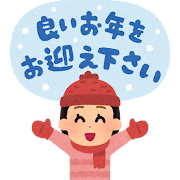


よいお年を!

( Yoi otoshi wo! )

よいお年をお迎えください! 

( Yoi otoshi wo omukae kudasai!) 


The phrase「よいお年を」 “Good New Year” is an abbreviation of the phrase 「よいお年をお迎えください」 “Please have a good New Year.” However, when greeting your superiors at the end of the year in business situations, it is common to politely say 「よいお年をお迎えください」instead of abbreviating it to「よいお年を」.

If you have been using this phrase in the sense of “Have a good New Year,” did you know that there is a difference in perception from the original meaning? As the end of the year is a hectic time with many events, the phrase is used in the sense of “I hope you will finish your various events and complete your preparations for a good new year.  It also expresses the feeling of “Let’s work hard at the busy year-end season and welcome a happy new year.”

For the above reasons, the greeting「よいお年を」is usually not used on 大晦日 (Omisoka) – December 31.

It is not necessary to say 「よいお年を」on December 31 because the New Year’s preparations should have already been made. The appropriate time to say this phrase is from mid-December to December 30. However, sometimes people say it on New Year’s Eve accidently and it might make the other person uncomfortable.  But they have no offense intended.

When greeting people on New Year’s Eve you can always use the safe phrase:


「来年もよろしくお願いします」

(Rainen mo yoroshiku onegai-shimasu.)

“I look forward to seeing you again next year”. 
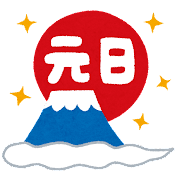


明けましておめでとうございます

( Akemashite omedetou gozaimasu! )


「明けましておめでとうございます」”Happy New Year!” is a phrase that is often used as a New Year’s greeting. It is a phrase that expresses congratulations on successfully passing the year and welcoming the new year. It has become a standard phrase you can see on New Year’s greetings and New Year’s cards.

「明けまして」refers to the end of one period or one state and the beginning of the next. In other words, 「明けましておめでとうございます」means that the last year has ended and the new year has just begun anew.  And it also expresses our feelings of quiet and holy celebration of the New Year.

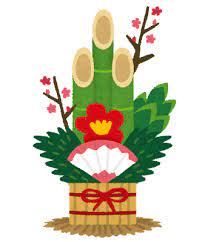
The time to say this phrase is during  松の内 (Matsunouchi), when the gods of the year come and stay in each of our houses.  In Japan, this period during the New Year’s holiday is when New Year’s decorations such as 門松 (kadomatsu), the special decoration using pine trees (matsu) is displayed to welcome the gods. The end of Matsunouchi is when the gods of the year leave the house, so we put away the New Year’s decorations.

The New Year’s holiday differs from region to region, and in the Kanto region it is until January 7, while in the Kansai region it is until January 15.


Some casual ways to say Happy New Year to your friends in Japan

In more casual settings, that is to say between friends or among young people:


「あけおめ!ことよろ !」 (Ake ome! Koto yoro!) can be heard quite frequently.

It simply is a shorter version of “あけましておめでとうございます。今年もよろしくお願いします”

(Akemashite omedetō gozaimasu. Kotoshimo yoroshiku onegai shimasu).

“Happy New Year! I look forward to seeing you again this year.”


In Conclusion

When greeting the Japanese people around you for the New Year’s holidays, why not express your gratitude for last year and greetings for this year in Japanese with all your heart?


どうぞ、よいお年をお迎えください☆

May your days be merry and bright★

 

6 Ways to Level Up your Japanese

FacebookTwitterLinkedInEmail

For foreigners living in Japan, the language barrier is no doubt one of the biggest hurdles to freely enjoying life in the country. Maybe you’ve had a job interview you couldn’t get through in keigo (polite speech). Or a local movie you couldn’t see in the theater because there were no English subtitles. Or a joke at a party you prayed someone would translate for you so you could join in the laughter. Whatever your experience, we can all relate that, at one point or another, the struggle is real.

Don’t be afraid of getting stuck though – build up your Japanese fluency with these language learning tips:

1. STUDY

Start your language learning journey by taking a class and building a solid foundation of vocabulary, grammar, listening skills, and reading skills. You would have to invest some time and money in attending regular lessons, but having experienced teachers to guide you is the quickest and most efficient way to learn.

Check out some language schools below and choose what class options are the best fit for you – private vs group, in-person vs online, short vs long term, conversational vs business Japanese, etc.

  • Coto Academy (Tokyo, Yokohama, and Azabu Juban)
  • ISI Language School (Tokyo, Kyoto, and Nagano)
  • Genki Japanese Language and Culture School (Tokyo, Kyoto, Nagoya, Fukuoka)


2. LISTEN

You don’t need to be in a classroom to improve your listening skills. Whatever your interests, look for Japanese media related to them and use those to immerse yourself. Watch a J-drama or anime series on Netflix without subtitles. Go to Spotify to look up the tunes your Japanese co-workers are belting out in karaoke. Keep up with what’s trending by subscribing to Japanese Youtubers. There are unlimited options to explore and enjoy.

For something more study-focused or slow-paced for learners, try starting with these:

  • JapanesePod101 (audio and video lessons)
  • Nihongo no Mori (Youtube channel)
  • News in Slow Japanese (website)


3. READ

Whether you are a beginner or an advanced learner, you will know that reading in Japanese can be notoriously difficult. However, unlocking this skill can help you navigate through daily life with much more ease. Start small by reading off menu items or train station names. Then, aim to make sense of practical things like street signs or letters in the mail. To make things more fun, also make small and big challenges for yourself like changing your phone’s language settings to Japanese or reading your favorite novel/comic in Japanese.

If kanji makes your head spin, take it easy with these websites offering articles with friendly furigana (hiragana over kanji characters).

  • Matcha (travel and culture blog)
  • NHK News Web Easy (news articles)
  • Watanoc (web magazine)


4. WRITE

Whether composing a diary entry, a thank you note, a business email, or even just a simple text message, writing is a practical way to apply what you’ve learned. Have a dictionary app or translator on hand to help you build your sentences and don’t be afraid to experiment. You can go at your own pace and check if you are able to communicate your thoughts in a way that really expresses what you mean to say.

One way to polish your writing skills is to get feedback. Here are some helpful resources where you can get a native speaker to correct what you write.

  • HelloTalk (language exchange app)
  • Lang-8 (language learning website)
  • Coto Academy (Japanese business writing course)


5. SPEAK

Speaking is the best way to really build up language proficiency. Build a community of fellow learners and local friends to keep you motivated to study and practice the language in everyday life. If you aim to develop your career in the country, look for work opportunities, side gigs, or volunteer jobs that require you to speak in Japanese. While it can be intimidating at first, it’s these kinds of authentic interactions with people and culture that can connect you to the language you are studying on a deeper level.

Still social distancing? No problem! Try one of these sites to make new friends or find a language exchange partner online:

  • Meet up (local community events, online and offline)
  • iTalki (1-on-1 lessons)
  • Preply (language tutors)


6. KEEP LEARNING

Learning any new language is definitely not easy and is even said to be a lifelong process. On the road to mastery, it’s easy to fluctuate between periods of inspired effort and dips in motivation. However, for adult learners especially, active learning and consistent practice is key to making progress. This doesn’t have to mean drilling yourself for hours to pass the JLPT though. Instead, set clear, achievable goals and vary them based on what you need and what you enjoy. Even small steps can take you a long distance over time, so keep at it and have fun in the process!

Quick Links
  • About Us
  • Teaching Positions
  • Our Schools
  • Training & Development
  • Apply
  • FAQ
  • Blog
View Available
Job Openings
Visit Gainjinpot.com
Contact Info
hr@rosettastone-lc.jp
Connect With Us
Quick Links
  • About Us
  • Teaching Positions
  • Our Schools
  • Training & Development
  • Apply
  • FAQ
School List
  • Ginza
  • Shinjuku
  • Ikebukuro
  • Kabukiza Tower
  • Umeda
Terms & Conditions . Privacy Policy
Copyright © Rosetta Stone Learning Center . All Rights Reserved
  • Home
  • About
  • Teach
  • Work
  • Grow
  • Apply
  • FAQ
  • Blog