Rosetta Stone Learning Center

  • Home
  • About
  • Teach
  • Work
  • Grow
  • Apply
  • FAQ
  • Blog

Wishing you good cheer in the New Year!

FacebookTwitterLinkedInEmail

How do you welcome the New Year?  

The beginning of a new year is a time to reflect on the year gone by, and make plans for the future. Some people go to shrines and temples, hoping to change our lives for the better.  We tip a glass of sake or wine with our family.

During this special time of the year, we give and receive warm greetings to our loved ones. These inspiring messages will be especially important as we express our hopes and dreams for better days ahead in 2022 after surviving the challenging year of 2021!



There are many お正月 (Oshogatsu) New Year’s phrases in Japan, but what phrases are there to use as greetings?

Today, I would like to introduce two phrases, one commonly used at the end of the year and the other at the beginning of the year, and why they are used at those times.
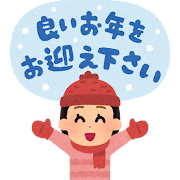


よいお年を!

( Yoi otoshi wo! )

よいお年をお迎えください! 

( Yoi otoshi wo omukae kudasai!) 


The phrase「よいお年を」 “Good New Year” is an abbreviation of the phrase 「よいお年をお迎えください」 “Please have a good New Year.” However, when greeting your superiors at the end of the year in business situations, it is common to politely say 「よいお年をお迎えください」instead of abbreviating it to「よいお年を」.

If you have been using this phrase in the sense of “Have a good New Year,” did you know that there is a difference in perception from the original meaning? As the end of the year is a hectic time with many events, the phrase is used in the sense of “I hope you will finish your various events and complete your preparations for a good new year.  It also expresses the feeling of “Let’s work hard at the busy year-end season and welcome a happy new year.”

For the above reasons, the greeting「よいお年を」is usually not used on 大晦日 (Omisoka) – December 31.

It is not necessary to say 「よいお年を」on December 31 because the New Year’s preparations should have already been made. The appropriate time to say this phrase is from mid-December to December 30. However, sometimes people say it on New Year’s Eve accidently and it might make the other person uncomfortable.  But they have no offense intended.

When greeting people on New Year’s Eve you can always use the safe phrase:


「来年もよろしくお願いします」

(Rainen mo yoroshiku onegai-shimasu.)

“I look forward to seeing you again next year”. 
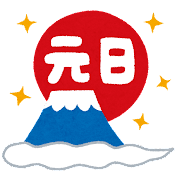


明けましておめでとうございます

( Akemashite omedetou gozaimasu! )


「明けましておめでとうございます」”Happy New Year!” is a phrase that is often used as a New Year’s greeting. It is a phrase that expresses congratulations on successfully passing the year and welcoming the new year. It has become a standard phrase you can see on New Year’s greetings and New Year’s cards.

「明けまして」refers to the end of one period or one state and the beginning of the next. In other words, 「明けましておめでとうございます」means that the last year has ended and the new year has just begun anew.  And it also expresses our feelings of quiet and holy celebration of the New Year.

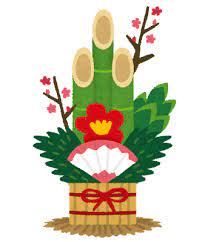
The time to say this phrase is during  松の内 (Matsunouchi), when the gods of the year come and stay in each of our houses.  In Japan, this period during the New Year’s holiday is when New Year’s decorations such as 門松 (kadomatsu), the special decoration using pine trees (matsu) is displayed to welcome the gods. The end of Matsunouchi is when the gods of the year leave the house, so we put away the New Year’s decorations.

The New Year’s holiday differs from region to region, and in the Kanto region it is until January 7, while in the Kansai region it is until January 15.


Some casual ways to say Happy New Year to your friends in Japan

In more casual settings, that is to say between friends or among young people:


「あけおめ!ことよろ !」 (Ake ome! Koto yoro!) can be heard quite frequently.

It simply is a shorter version of “あけましておめでとうございます。今年もよろしくお願いします”

(Akemashite omedetō gozaimasu. Kotoshimo yoroshiku onegai shimasu).

“Happy New Year! I look forward to seeing you again this year.”


In Conclusion

When greeting the Japanese people around you for the New Year’s holidays, why not express your gratitude for last year and greetings for this year in Japanese with all your heart?
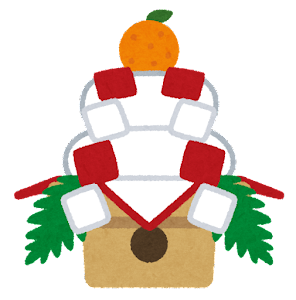


どうぞ、よいお年をお迎えください☆

May your days be merry and bright★
 

Hooray, Golden Week!

FacebookTwitterLinkedInEmail

Along with Obon and The New Year’s holidays, Golden Week is one of the three most important and anticipated events in Japan for parents and children alike. This is a time when businesses traditionally close and employees can finally enjoy the warmer weather and some (well-deserved) holidays.

Golden Week’s most remembered and celebrated day is probably Children’s Day, but do we always remember what the other days are ? Let’s try and revisit the origins of Golden Week and what events in history are celebrated during this period.

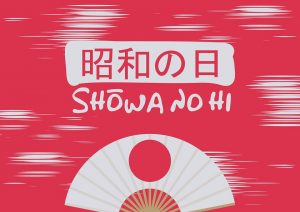
APRIL 29 | Showa Day (昭和の日)

On the 29th of April, Japanese people are invited to reflect on the 63 years of Emperor Hirohito’s reign – the Shōwa era.  However until 2006,  this was a day to celebrate greenery and nature since this was one of the emperor’s favourite activities. On this day, Japanese people do not have festivities as is customary with national cultural days. Instead, people usually travel back home or abroad, attend public lectures on the topic of the Shōwa era or the history of WWII, or simply hang out and enjoy the warmer weather.


MAY 3 | Constitution Memorial Day (憲法記念日)

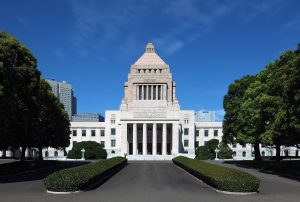
Constitution Memorial Day on the 3rd of May is the celebration of the enactment of the 1947 constitution of Japan. Much like Shōwa day, this a day of reflection but this time on the meaning of democracy and the Japanese government. If you fancy, you can visit the National Diet building and participate in one of their tours on this day.

MAY 4 | Greenery Day (みどりの日 )

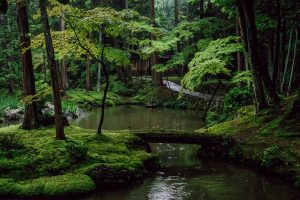
Photo by Michael Yamashita

Just as the name implies, Greenery Day is a day to appreciate nature and its blessings. There are no typical celebrations held on the 4th of May, but perhaps this is the time to petition for nationwide free entry to  botanical gardens or arboretums! Wouldn’t you dream of touring the most beautiful Japanese gardens? I know I would!

MAY 5 | Children’s Day (こどもの日)

Children’s Day on the 5th of May is the star of the Golden Week celebrations and for good reason! It used to be called Tango no Sekku ((端午の節句) and celebrated boys and fathers. Nowadays, this is a time to celebrate the growth and success of both boys and girls across Japan.
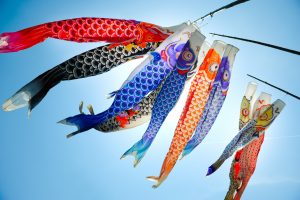
Families typically decorate their homes with carp-shaped streamers, samurai’s helmets called kabuto, and Kintaro dolls. These all represent wishes to raise strong and powerful boys (and girls). Not just a feast for the eyes, families would also enjoy delicious traditional dishes called chimaki and kashiwa mochi (check out recipes here) on this day.

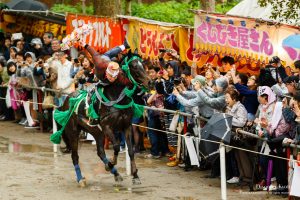
Photo from discoverkyoto.com

For those lucky to be in the Kansai region, a famous festival with horseback riding shows called Kakeuma shinji is held at the Fujinomori temple in Kyoto. Reminiscent of the samurai days, riders perform breathtaking tricks on their horses displaying fantastic equestrian and archery skills. However, don’t buy your ticket just yet for 2021 as it seems that the event will not be held this year because of the Covid-19 pandemic.


I hope you enjoyed reading about Golden Week or learned a little more about this highlight of the year in Japan. Have a great Golden Week ahead!

Japanese New Year’s traditions to kick off 2021

FacebookTwitterLinkedInEmail

Begin the New Year with these 6 Japanese traditions that anyone can enjoy! Feel the history and participate in what makes the New Year’s holiday great.

Joya no Kane

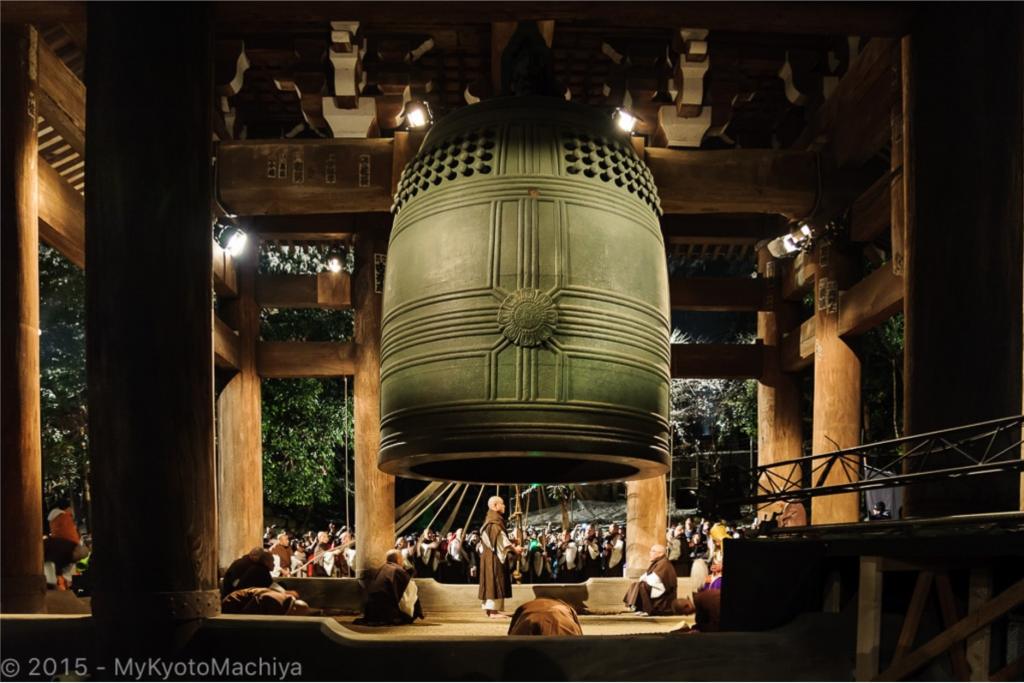
The ringing of the New Year’s bells is a Buddhist tradition where monks ring a temple’s bells 107 times leading up to midnight, with one final ring exactly at midnight. The goal is to rid oneself of worldly desires and leave the last year’s problems behind for a fresh start. 

People can visit temples on New Year’s Eve to listen to the bells and pray for good things during the new year. Some popular temples for this ceremony in Tokyo are Senso-ji, Zojo-ji, Zenpuku-ji, Tsukiji Hongan-ji, and Araiyakushi Baishoin.


Toshikoshi Soba

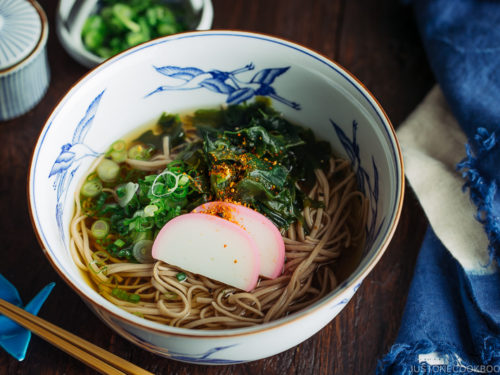
“Year-crossing” soba is a traditional food eaten to reflect on the past year and usher in the New Year. The dish is served hot and is usually eaten at midnight on New Years’ Eve. Luckily, toshikoshi soba is easy to make and can even be made vegetarian or served with extra toppings. 

For a recipe, visit https://www.justonecookbook.com/toshikoshi-soba/.


Osechi Ryori

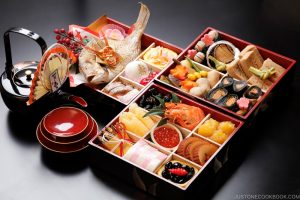
The long tradition of osechi ryori was originally created to give wives a break from cooking while giving people a meal heavy with symbolism for the New Year. Kuromame (hard work and good health), dried persimmon (long life), and Katniss root (successful career) are just some of the many foods that can be found in osechi ryori boxes. While some families still make these dishes at home, it is quite common to buy osechi boxes. Most supermarkets and department stores offer a wide variety of osechi leading up to New Years’ Eve.


Nengajo

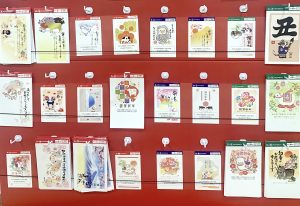
Japanese New Years’ cards are still a very common tradition that is meant to show family, friends, and even co-workers gratitude for all of their help over the past year. As a general rule, if you receive a New Years’ card, it is considered good manners to send one in return, but make sure that the card(s) will be delivered by January 1st!


Hatsumode

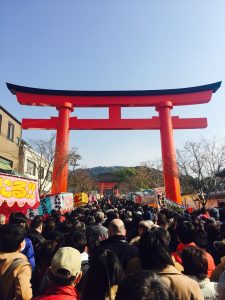
Hatsumode is traditionally the first Shinto shrine visit of the new year; however, some people do visit Buddhist temples as well. Generally, people pray, buy charms or amulets, and have the old charms from the previous year ceremonially burned. Almost any shrine or temple is very busy during the first few days of the new year, so expect long lines. 


Hatsuhinode

Hatsuhinode is the viewing of the first sunrise of the year across the country. Some famous places for viewing are Tokyo Tower, Yakuo-in (Mt. Takao), and Enoshima (Kanagawa Prefecture).  


Have a happy New Year and enjoy the holidays!


Quick Links
  • About Us
  • Teaching Positions
  • Our Schools
  • Training & Development
  • Apply
  • FAQ
  • Blog
View Available
Job Openings
Visit Gainjinpot.com
Contact Info
hr@rosettastone-lc.jp
Connect With Us
Quick Links
  • About Us
  • Teaching Positions
  • Our Schools
  • Training & Development
  • Apply
  • FAQ
School List
  • Ginza
  • Shinjuku
  • Ikebukuro
  • Kabukiza Tower
  • Umeda
Terms & Conditions . Privacy Policy
Copyright © Rosetta Stone Learning Center . All Rights Reserved
  • Home
  • About
  • Teach
  • Work
  • Grow
  • Apply
  • FAQ
  • Blog